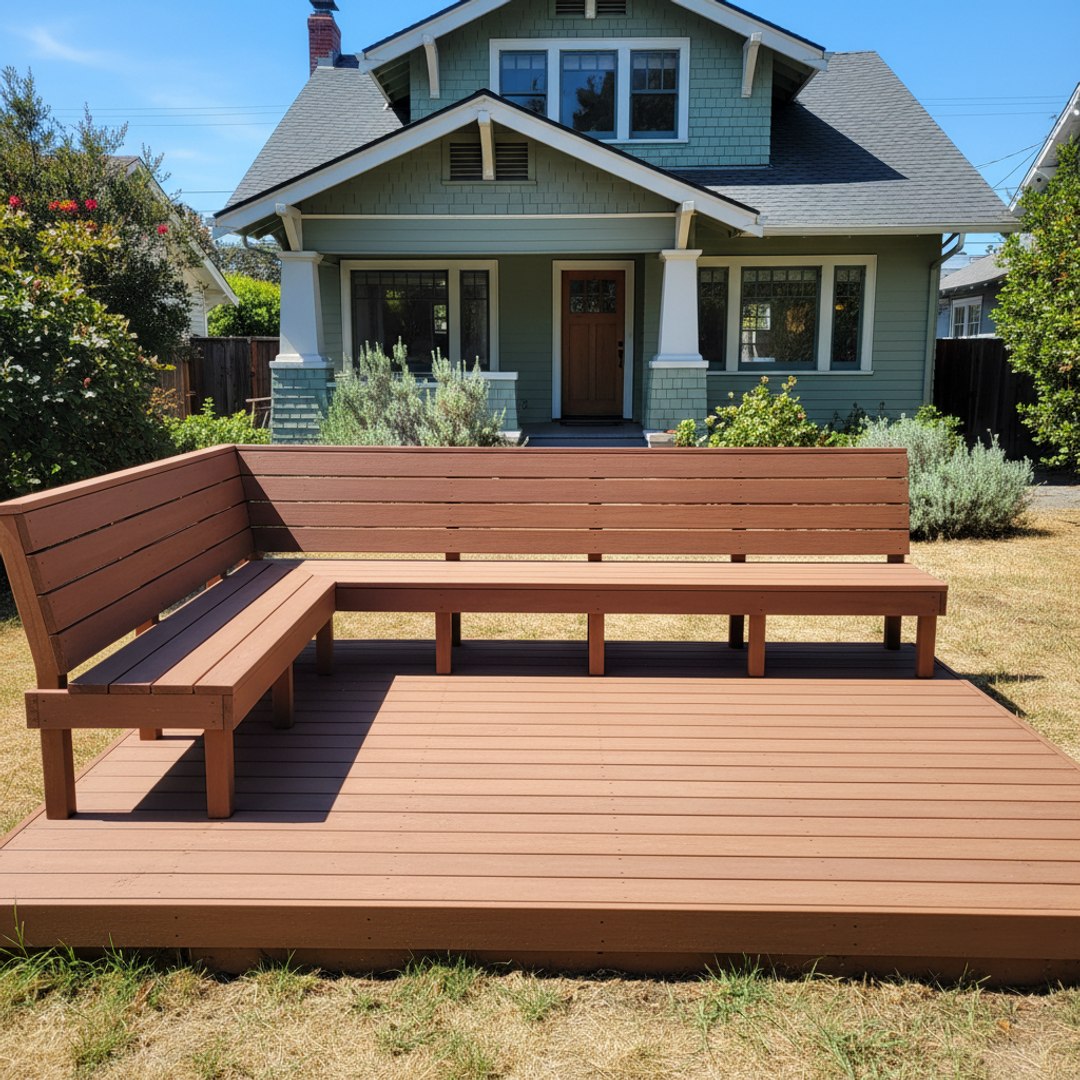
Sacramento's clay soil moves. A lot of the valley sits on what's called adobe clay, and it swells when it's wet and shrinks hard when it dries out over a Central Valley summer. A deck footing that isn't poured deep enough, or isn't wide enough to spread the load, will heave a few degrees over a couple of seasons. You won't notice at first. You'll notice when the ledger board starts pulling away from the house, or a rail post is suddenly out of plumb.
That's the real reason picking a deck builder here matters more than picking someone for, say, a kitchen remodel. Decks live outside, on ground that behaves differently than the slab under your living room, through 100-degree July afternoons and a wet season that can dump several inches of rain in a week during an atmospheric river event, usually January through March. A deck built wrong doesn't fail in a dramatic way. It fails slowly, at the connections, and often you don't find out until someone's leaning on the rail.
Ask about the permit before you ask about the price
Most jurisdictions around Sacramento, the city, the county, Elk Grove, Folsom, Roseville, require a building permit for a deck attached to the house or elevated more than 30 inches above grade. That means a plan check, a footing inspection before you pour concrete, and a final inspection before you're allowed to use it. A builder who tells you permits are usually skipped, or that they slow things down and aren't worth it, is telling you they don't want an inspector looking at their footings. That's the one to pass on.
If your house is in a newer subdivision in Elk Grove, Natomas or the newer parts of Folsom, there's a good chance you've got an HOA with its own design review on top of the city permit, sometimes over rail style, decking color, or how close a structure can sit to a fence line. Ask a builder whether they've worked with your HOA before. If they haven't, that's not disqualifying, but plan on an extra couple of weeks for review.
What the framing actually needs to look like
A deck is only as good as three connections: the ledger to the house, the posts to the footings, and the joists to the ledger and beam. Ask how the ledger gets attached. Current practice calls for lag screws or through-bolts, not nails, with flashing behind the board so water running off the house doesn't sit against the wall framing. If someone says they just nail it, that's a deck that starts pulling loose within a few years, especially once the clay under the footings goes through its seasonal shift.
Footings typically go below 12 inches, deeper depending on soil and load, and are sized to the beam span. A builder should be able to give you post spacing and joist span numbers without hesitating, or pull out a span table on the spot. If they're guessing on that, they're guessing on your deck too.
Where the water goes
Most lots around here are graded to move water away from the foundation, but a deck built over that grading can trap it. Clay doesn't drain the way sandy soil does, so water pooling under a low deck can sit for days after a February storm and start rotting joists that weren't rated for ground contact. A builder worth hiring asks about your yard's slope and where the downspouts empty before framing goes up, not after the deck is already sitting on top of the problem.
Materials that make sense in this climate
Pressure-treated Douglas fir is still the standard framing lumber here, and it holds up fine kept off wet ground and properly flashed. For the surface itself, homeowners split between real wood, cedar or redwood, and composite. Redwood looks good and is still available through Northern California lumber yards, but it needs staining or sealing every two to three years or the summer sun will grey it out and start checking the surface. Composite costs more upfront and skips that maintenance cycle, but it runs hotter underfoot in August than wood does, which matters on a west-facing deck with no shade structure over it.
A decent builder asks about sun exposure before recommending a material. A pushy one just hands you a catalog.
Older street versus new subdivision
A deck job in Land Park, Curtis Park or East Sacramento, in a house built between the 1920s and the 1950s, usually means dealing with a foundation and grading that's settled unevenly for decades, sometimes with an addition or two already changing how water moves around the house. A deck in Elk Grove or newer Folsom is going into fill soil that's more consistent but also more recently disturbed, which changes how a footing settles in the first year or two. Ask a builder if they've worked on your type of lot before. The answer tells you whether they're building from experience or guessing.
Red flags that mean you walk
- A bid dramatically lower than every other one you got, with no explanation for the gap.
- Wanting the full payment, or more than about a third, before any material shows up on site.
- No written contract, or one that doesn't list lumber grade, footing depth, or fastener type.
- Reluctance to give you a license number you can check against the state contractors board.
- No mention of a permit, ever, unless you bring it up first.
None of that automatically means someone's dishonest. Some contractors just aren't set up to do a job at the scale a project like yours requires. But the warning signs look the same whether it's carelessness or corners being cut on purpose, so your response should be the same either way.
What a decent contract actually spells out
A contract worth signing names the lumber species and grade, the footing size and depth, the fastener hardware, the decking material and brand if it's composite, a payment schedule tied to milestones instead of a lump sum upfront, and who's pulling the permit. It should also say what happens if the inspector calls for a change, because that happens sometimes, especially on an older lot where the original grading was never documented. A deck that passes final inspection typically takes two to four weeks from the first stake in the ground, longer for a multi-level design or during a busy permit season.
If you're weighing a few bids right now, set the cheapest one aside for a minute and read the other four line by line. The one that mentions ledger flashing, footing depth and inspection timing without you having to ask is usually the one that's done this enough times to know where the real risk sits. That's the kind of detail that goes into every estimate we write at Omega Deck Company, because it's the difference between a deck that's still solid in fifteen years and one that starts working loose after three.