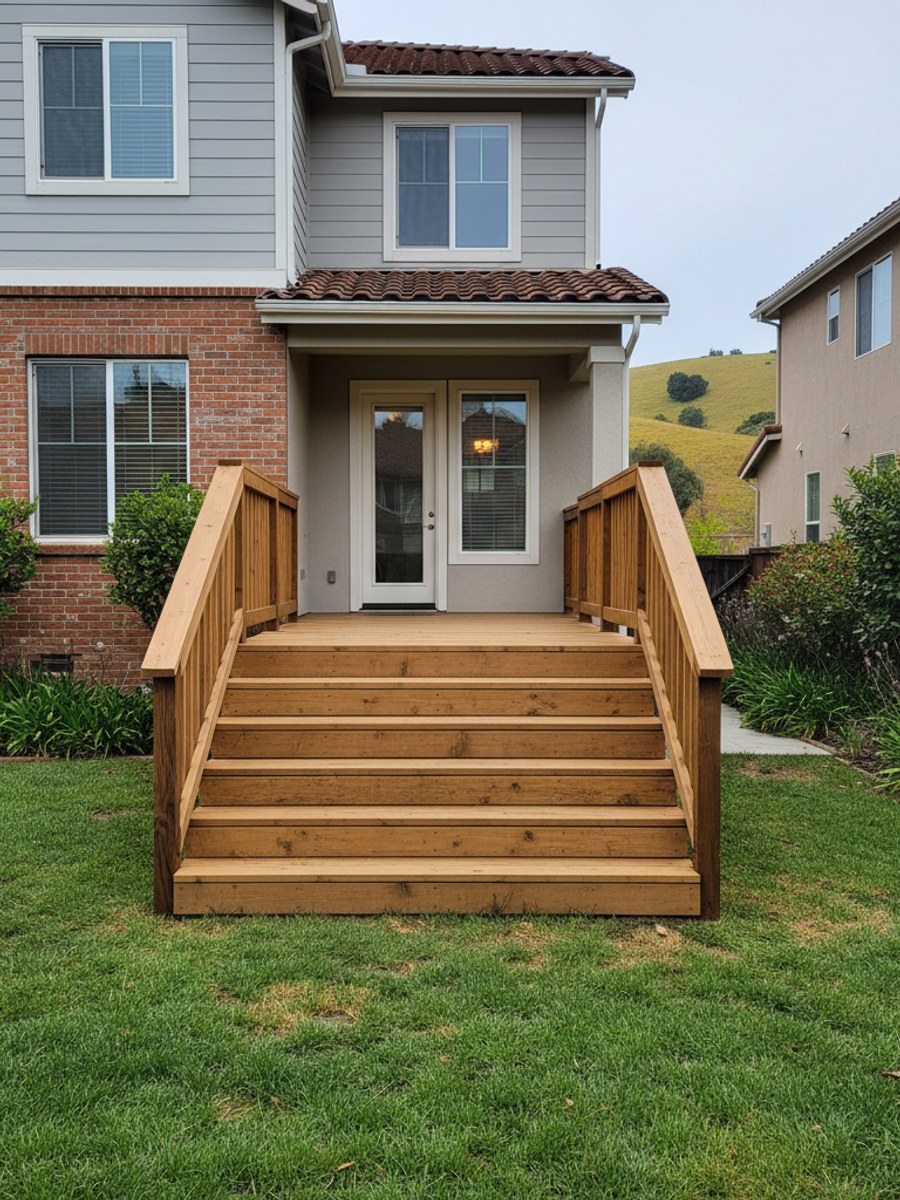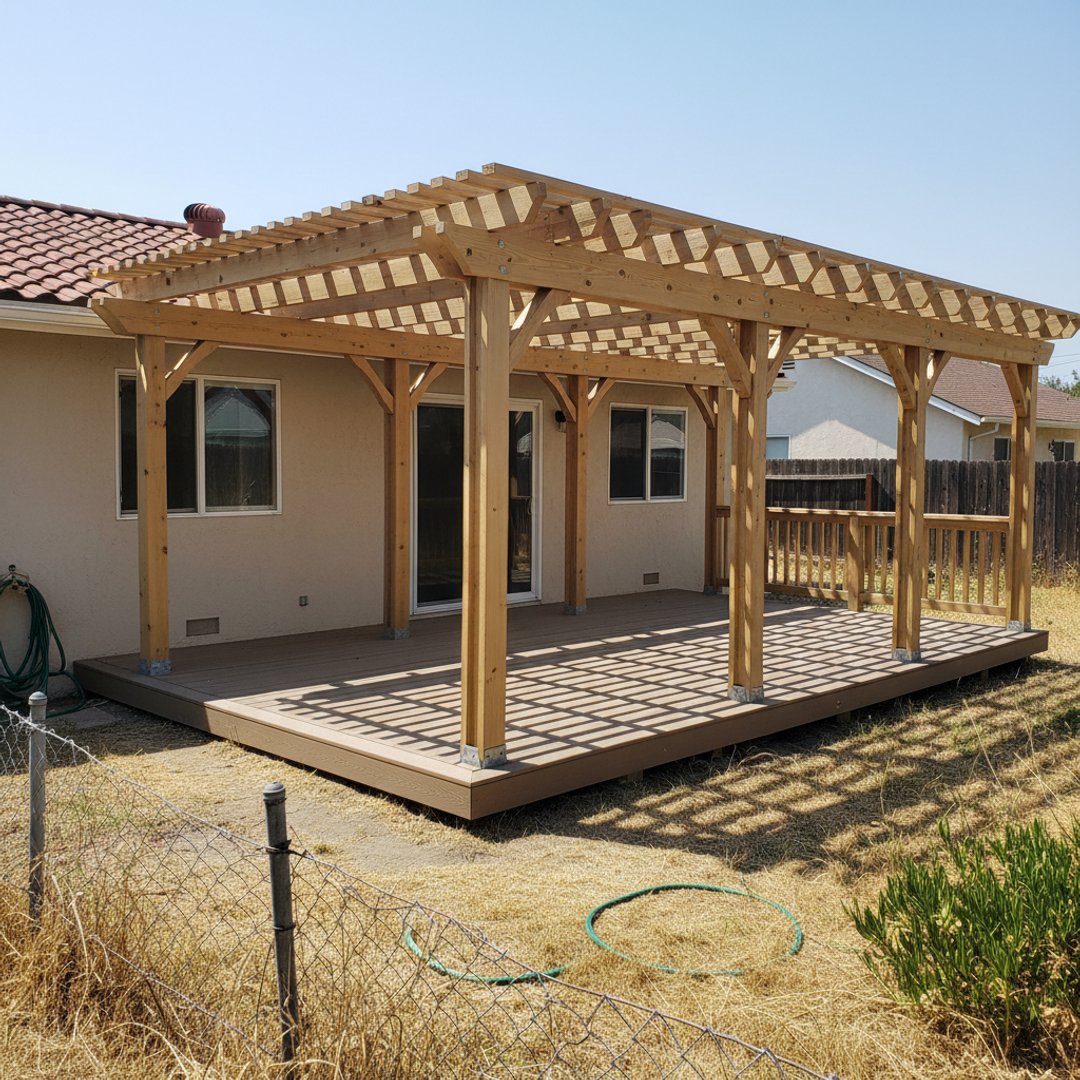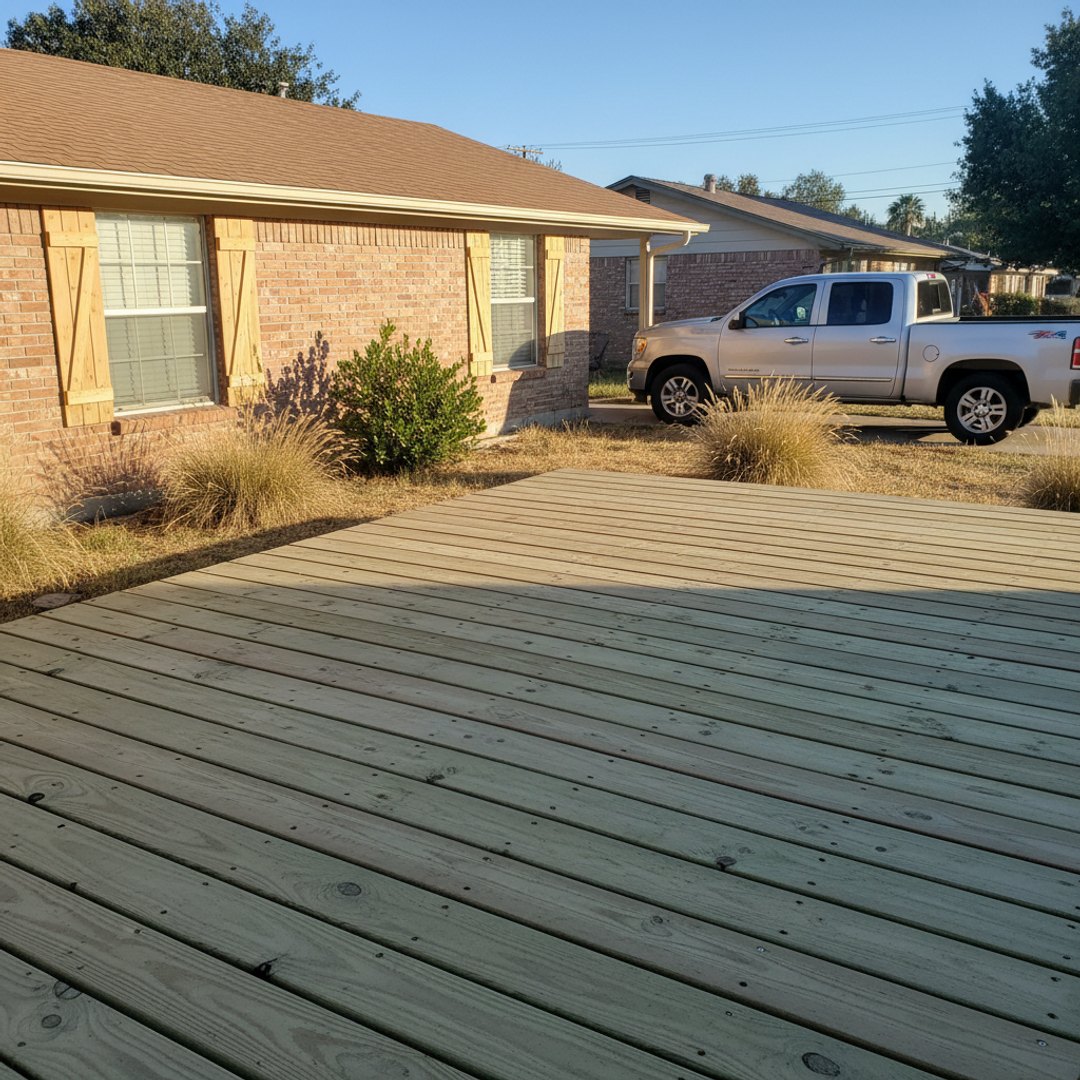
We build and repair decks around Sacramento, working mostly with homeowners who want an outdoor space that can actually hold a grill, a table and a few people without flexing underfoot. We got into deck work because it's carpentry you can stand on the same day it's done, and because so much of what makes a deck last is invisible once the boards go down.
If you're on this page, there's a decent chance a board's gone soft, a railing moves more than it should, or a deck that looked fine last year is starting to gray and split. Most of that traces back to water getting into the frame through a ledger board that was never flashed, or joists spaced wider than the span actually allows. We open up the structure before we quote a fix, so the repair addresses the framing and not just the board you can see.
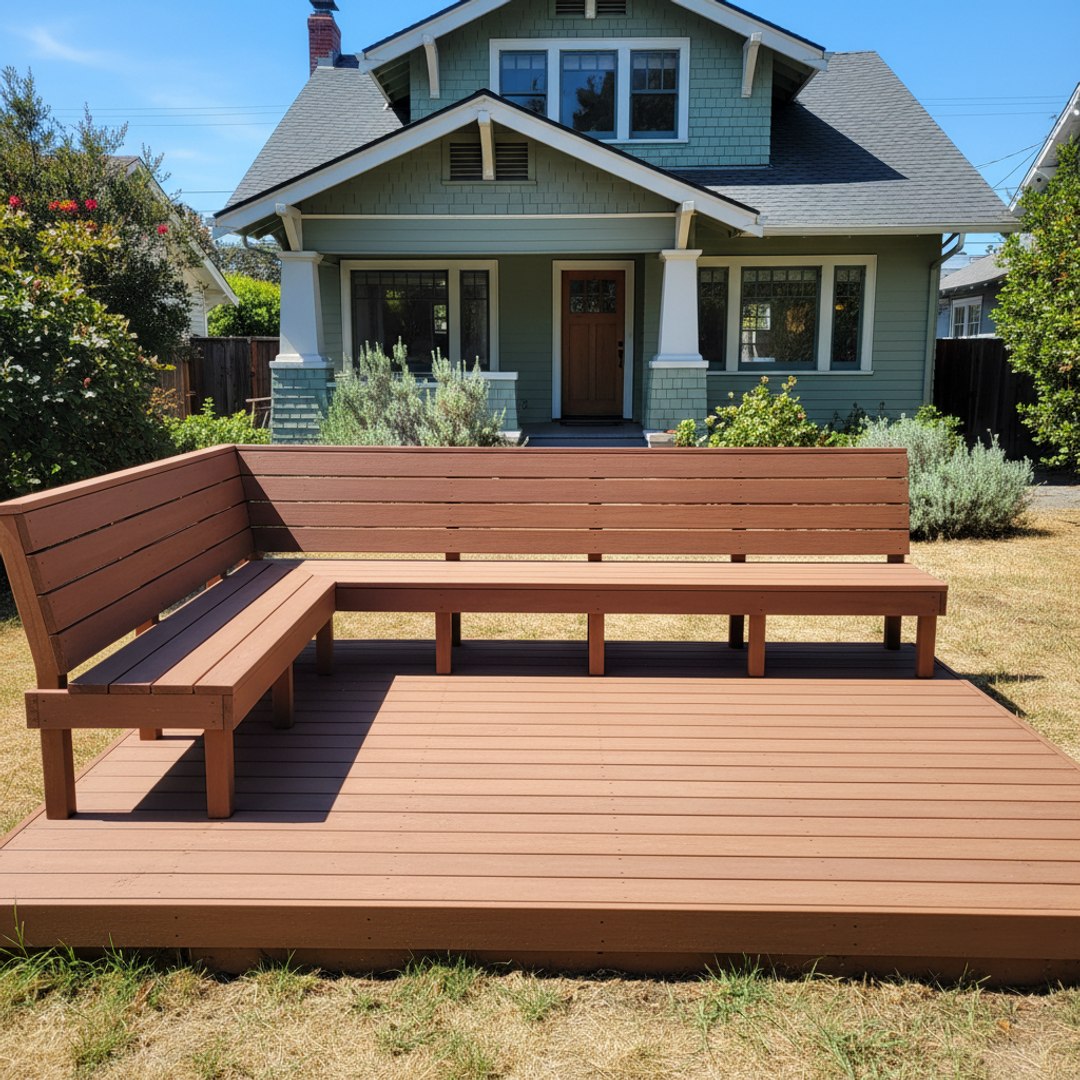
None of this is complicated. It is mostly just doing what we said we would do.
We carry the license and insurance a deck project actually requires, and we'll show you the certificates if you ask. That matters more with decks than a lot of trades, since a bad railing or a failed footing is a real injury risk.
You get a written quote that breaks out lumber, hardware and labor, not a single lump number. If something changes once we open up the old framing, we tell you before we do the work, not on the invoice.
The people framing your deck are the same people who talked through the design with you. That keeps the answers consistent when a question comes up mid-project instead of getting passed between companies.
Deck jobs get pushed around a lot when a crew is juggling five sites at once. We keep our schedule tight enough that we can actually commit to a start date and a rough finish window.
We install pressure-treated lumber, cedar and composite decking, and we'll tell you honestly which one fits your budget and how much upkeep you're signing up for. Composite costs more upfront and needs almost no maintenance, treated lumber costs less but needs re-sealing every couple years.
We know which parts of Sacramento have clay soil that heaves footings if they're not set deep enough. We also know which cities require a permit for anything over 30 inches off the ground, so we plan for it up front.
Questions about how we work and who's doing the work.
Free estimate, a price in writing, and work we stand behind.